




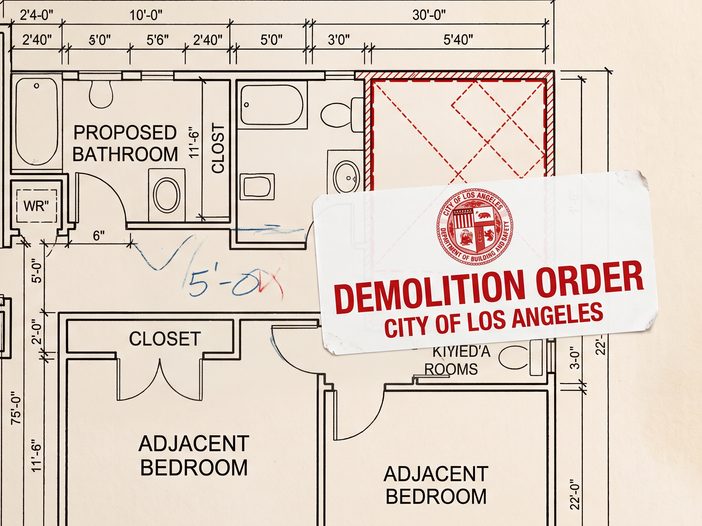
A bathroom becomes an engineering report. A garage that’s housed a family for decades becomes a demolition order. Somebody’s paying for that, and it isn’t City Hall.
I came to Los Angeles from the other side of the world with a pocket full of dreams and not much else.
Like many people before me.
Like many who will come after me.
Maybe that is why I have never learned to take this city for granted.
I still notice Los Angeles, but not in a postcard kind of way. I notice how completely the city changes from one neighborhood to the next. One day I’m in Jefferson Park, the next in Woodland Hills, then Beverly Hills or Pasadena. And this job has given me something most people never get:
An excuse to wander.
Los Angeles isn’t really one city. It is a hundred little villages that happen to share a freeway system.
Real estate has allowed me to know some of them block by block. The streets and little restaurants and businesses you would never discover unless somebody gave you a reason to turn down that particular road.
Late afternoon light doesn’t care if it’s hitting Crenshaw or Rodeo Drive, it looks good either way.
Los Angeles gave me a career. It gave me a family, a community and a life.
So I write this reluctantly.
Because at some point, loving a place also means being willing to say when something isn’t working.
Which is exactly why I think I’ve earned the right to say this out loud.
This city has a building permitting culture crisis. And it’s quietly working against the one thing it claims to care about most: the homes already standing.
Back in May 2022 I moderated a City Attorney candidates’ forum for the Italian American Lawyers Association. One of the candidates, Hydee Feldstein Soto, went on to win the race. I asked her straight, what was she going to do about all the red tape strangling anyone who tried to fix or improve a piece of property in this city.
Her answer was short and memorable.
“Get out of the way.”
Best answer of the night. Nobody’s arguing government shouldn’t set standards. Wiring should be safe. Buildings should survive an earthquake. But there’s a wide gap between regulating for safety and building a system where people are scared to ask permission to fix their own house.
Four years later, I’m still waiting for “get out of the way” to become how the City actually does business, instead of just a good line at a candidate forum.
Here’s what that waiting looks like.
A client of mine owns a house he’s getting ready to sell. Before it goes on the market he wants to add a bathroom, carved out of an oversized walk-in closet. Nothing added onto the house. No second story. A bathroom, inside walls that already exist.
Because he’s exactly the kind of owner the City should be begging for, he did it right. He walked in with his contractor, plan in hand, and asked.
That’s when the trouble started.
Buried deep in the file, the plan inspector found an old enclosed porch. Maybe forty square feet, closed in at least half a century ago, years before my client ever owned the place. Now he’s being asked for engineering and foundation work.
But it gets worse.
The Los Angeles Department of Building and Safety is trained to find problems, not offer solutions, so they went on a fishing expedition to create more. What comes next is hard to believe, but for LADBS, it’s just another routine day.
All this, mind you, started because a man wanted to add one bathroom before selling his house. Somewhere in the middle of that hunt, they found the real prize: a garage out back, converted into a two-bedroom unit so long ago that, by LA logic, Charlie Chaplin probably wrote his first skit in it. For the past twenty years, it kept a family housed for decades, right up until they moved out not long ago.
He was told it needs to come down.
Sit with that for a second. A man walks into City Hall wanting one more bathroom, the kind of thing that’ll help his house work for some first-time buyer’s shot at getting into this city. He walks out having to tear down an entire dwelling. In a city that doesn’t have enough of them.
You couldn’t design a better way to teach the next homeowner one lesson: don’t ask, don’t tell, keep the City as far from your property as you can.
I’ve sold houses in this city long enough that I’ve lost count of the converted garages, the enclosed patios, the bedrooms that used to be something else, the walls that moved thirty years ago and nobody left alive can explain why. Some of it’s unsafe and needs fixing, no argument. Most of it has just been standing there quietly for decades, housing somebody.
People are afraid, and it’s not paranoia, it’s arithmetic. LADBS’s own rules say the current owner is on the hook for unpermitted work even when a previous owner or tenant did it fifty years earlier. Walk in to fix your bathroom, walk out responsible for every decision made on that lot since shag carpet was a selling feature.
That’s the incentive we’ve built. Ask nicely, get punished for someone else’s sins. So people stop asking.
I don’t think LADBS is the villain here. There are good people in that building doing a hard job inside a system nobody designed on purpose, and the City has made real progress letting simpler projects get express permits online. But the department isn’t the real problem. The culture is. Too often the person at the counter isn’t met with “what are you trying to accomplish, and how do we get you there safely.” They’re met with a search for what’s wrong.
I want to be clear about something, because it matters to me. This isn’t an argument about building more housing, about zoning fights or density battles or any of that. Those conversations matter, they’re just not mine to have here.
This is about something smaller, and I’d argue more overlooked: the housing we already have. The bathroom someone wants to add before selling. The garage that quietly became a home. The porches, the additions, decades of quiet, unglamorous work that never makes a headline about the housing crisis, and instead disappears one demolition order at a time.
Nobody throws a ribbon-cutting for a unit that didn’t get torn down.
Nobody holds a press conference because an old house got another generation of useful life.
But that work matters.
Los Angeles is full of homes that have been altered, added onto, repaired, neglected, repaired again, and somehow kept going for fifty, seventy, sometimes a hundred years. That is the housing stock we actually have.
And there are people every day trying to make it better.
That is where I think the City loses the plot.
When somebody voluntarily walks in trying to improve a property, the process should not become a scavenger hunt through fifty years of somebody else’s decisions.
That doesn’t make people more responsible.
It makes them more careful about ever asking permission again.
And once you have spent enough time in Los Angeles real estate, you hear the same advice over and over:
Don’t open that can of worms.
Don’t ask unless you absolutely have to.
Don’t get the City involved.
Think about how backwards that is.
The very people who are trying to follow the rules have learned to be afraid of the people enforcing them.
And we have lived with this for so long that most Angelenos barely react anymore.
You submit something.
You wait.
Another issue comes up.
Another person needs to look at it.
Another set of plans.
Another correction.
Another few weeks.
Eventually everyone shrugs and says, “That’s L.A.”
Maybe.
But it shouldn’t be.
I still think the essence of Hydee Feldstein Soto’s answer that night was right: get out of the way.
Not out of the way of reasonable rules.
Just out of the way of people trying to do the right thing.
If someone wants to restore an old house, help them.
If someone wants to bring an old condition into compliance, give them a path.
If a structure has been standing for decades and can safely remain, start with that possibility before asking for demolition.
Los Angeles spends a great deal of time talking about the housing we need to build. We should spend a little more time helping people save the housing we already have.
Because sometimes preserving one more home is not a grand housing policy.
It’s just common sense.
And Los Angeles could use a little more of that.